
Our planet faces unprecedented environmental challenges, from soil degradation to climate instability. The urgent need to restore ecological balance has never been more critical for humanity’s survival and prosperity.

Restorative land practices offer a transformative pathway toward healing our damaged ecosystems while simultaneously addressing food security, biodiversity loss, and climate change. These regenerative approaches represent more than environmental stewardship—they embody a fundamental shift in how humanity interacts with the natural world, moving from extraction to restoration, from depletion to renewal.
🌱 Understanding the Current State of Global Land Degradation
Nearly one-third of the world’s soil has already been degraded due to intensive agricultural practices, deforestation, and industrial activities. This alarming statistic reflects decades of unsustainable land management that has prioritized short-term yields over long-term ecosystem health. The consequences extend far beyond agricultural productivity, affecting water quality, carbon storage capacity, and the survival of countless species.
Conventional farming methods have depleted soil organic matter, disrupted microbial communities, and created landscapes vulnerable to erosion and desertification. Industrial monocultures have replaced diverse ecosystems, leaving land brittle and dependent on chemical inputs. This degradation cycle perpetuates itself, requiring ever-increasing interventions to maintain productivity while the land’s natural resilience continues to diminish.
The Hidden Costs of Degraded Landscapes
The economic impact of land degradation reaches into trillions of dollars annually when accounting for lost productivity, increased flooding, drought vulnerability, and health consequences. Communities dependent on agriculture face diminishing returns, forcing migration and social disruption. The environmental costs manifest in reduced biodiversity, impaired water cycles, and accelerated climate change through carbon release from damaged soils.
Beyond measurable economics, degraded landscapes represent lost cultural heritage, severed connections between communities and their ancestral lands, and diminished quality of life for billions of people. The psychological and spiritual dimensions of environmental degradation remain largely unquantified but profoundly significant.
🔄 The Foundation of Restorative Land Practices
Restorative land practices encompass a holistic approach to land management that seeks to rebuild soil health, restore hydrological functions, enhance biodiversity, and sequester carbon while maintaining or improving productive capacity. These practices draw wisdom from traditional agricultural systems, combine them with modern ecological science, and adapt them to diverse geographical and cultural contexts.
The core principle underlying restorative practices is working with natural processes rather than against them. This means understanding soil as a living ecosystem, recognizing the intricate relationships between plants and microorganisms, and designing landscapes that mimic natural patterns. Restoration doesn’t mean abandoning human use but rather reimagining it within regenerative frameworks.
Key Components of Regenerative Land Management
Successful restorative practices integrate multiple strategies that work synergistically to rebuild ecosystem function. Soil health forms the foundation, with practices focused on increasing organic matter, protecting soil structure, and nurturing microbial diversity. Cover cropping, composting, reduced tillage, and diverse crop rotations all contribute to rebuilding soil vitality.
Water management represents another critical component, with techniques designed to slow, spread, and sink water into landscapes rather than allowing rapid runoff. Contour plowing, swales, retention ponds, and strategic vegetation placement help restore natural hydrological cycles. These interventions reduce erosion, recharge groundwater, and create more resilient landscapes capable of withstanding both drought and flood.
Biodiversity enhancement through polyculture systems, wildlife corridors, and habitat creation supports ecosystem resilience while providing multiple yields. Diverse landscapes prove more resistant to pests, diseases, and climate variability while offering numerous ecological services beyond commodity production.
🌾 Regenerative Agriculture: Farming That Heals
Regenerative agriculture represents perhaps the most accessible entry point for widespread implementation of restorative land practices. Unlike conventional agriculture’s extractive model, regenerative farming builds soil fertility over time, captures atmospheric carbon, enhances water retention, and increases biodiversity while producing nutritious food.
Farmers practicing regenerative methods report improved yields, reduced input costs, and greater resilience to weather extremes. The transition requires knowledge, patience, and often initial investment, but the long-term benefits far exceed conventional approaches. Success stories span every continent and climate zone, demonstrating the universal applicability of regenerative principles.
Practical Regenerative Techniques Transforming Farms
No-till or minimal tillage farming protects soil structure and the organisms living within it. By leaving soil undisturbed, farmers preserve moisture, reduce erosion, and allow natural soil building processes to accelerate. Combined with cover cropping, this approach creates continuously living root systems that feed soil biology year-round.
Mob grazing or adaptive multi-paddock grazing mimics the movement patterns of wild herbivores, concentrating animals briefly in small areas before moving them. This intensive rotation stimulates plant growth, builds soil organic matter through manure incorporation, and prevents overgrazing while improving pasture productivity dramatically.
Agroforestry integrates trees into agricultural landscapes, creating layered systems that produce multiple yields while enhancing ecological functions. Trees provide shade, windbreaks, nitrogen fixation, deep nutrient cycling, wildlife habitat, and additional income streams from fruits, nuts, timber, or fodder.
💧 Watershed Restoration: Healing Landscapes at Scale
Watershed-level restoration addresses land degradation at the appropriate scale for hydrological processes. By treating entire catchments as integrated systems, restoration efforts achieve greater impact than isolated interventions. Healthy watersheds regulate water flow, filter pollutants, support diverse habitats, and provide reliable water supplies for human and ecological communities.
Degraded watersheds exhibit erratic flows, with intense flooding followed by prolonged drought. Streams cut deeper into landscapes, lowering water tables and draining wetlands. Restoration reverses these patterns through strategic interventions that slow water movement, increase infiltration, and reconnect floodplains.
Watershed Restoration Strategies
Riparian buffer restoration protects stream banks with native vegetation, reducing erosion while filtering runoff before it enters waterways. These vegetated corridors cool water temperatures, provide wildlife habitat, and create beautiful green infrastructure connecting landscapes.
Wetland reconstruction captures water during high flows, releasing it gradually during dry periods. Wetlands serve as nature’s kidneys, purifying water while providing crucial habitat for countless species. Their restoration delivers disproportionate ecological benefits relative to their size.
Stream morphology restoration reconnects rivers with floodplains, allowing natural meandering and creating diverse aquatic habitats. Removing channelization and installing natural structures like log jams restores ecological function while enhancing flood resilience.
🌳 Reforestation and Forest Landscape Restoration
Forests provide irreplaceable ecosystem services, from carbon sequestration to biodiversity conservation, watershed protection to climate regulation. Deforestation and forest degradation have eliminated or damaged vast forest areas, but restoration efforts are gaining momentum globally. Successful forest restoration requires understanding local ecological dynamics, engaging communities, and ensuring long-term stewardship.
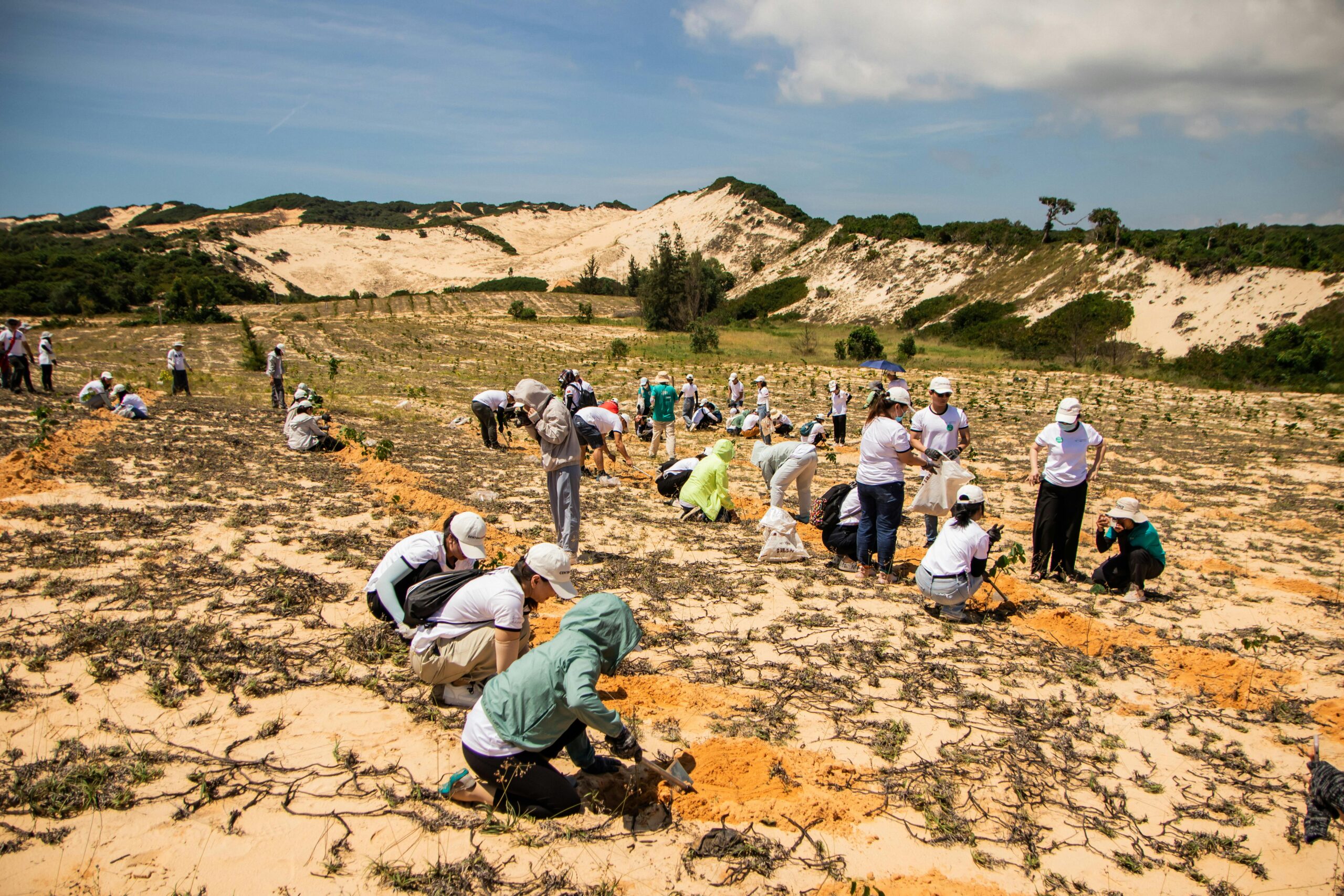
Natural regeneration often provides the most cost-effective restoration pathway where seed sources remain available and land use pressures can be managed. Assisted natural regeneration accelerates this process through selective clearing, protection from grazing, and strategic planting. Active reforestation becomes necessary where ecosystems have been severely degraded or invasive species dominate.
Forest Restoration Approaches
Mixed native species plantings create more resilient forests than monocultures, supporting diverse wildlife while providing varied economic opportunities. Species selection should reflect local ecological conditions, climate projections, and community needs, balancing conservation with sustainable use.
Agroforestry systems allow productive land use while restoring forest cover and ecosystem functions. Farmers benefit from diversified income while landscapes gain ecological connectivity and carbon sequestration capacity. These systems demonstrate that conservation and production need not be opposing goals.
🏘️ Urban Ecological Restoration: Greening Cities
Urban areas house the majority of humanity, yet they need not be ecological deserts. Urban ecological restoration transforms degraded city spaces into functional green infrastructure that provides cooling, stormwater management, air purification, biodiversity habitat, and improved quality of life. Green roofs, rain gardens, urban forests, and restored waterways bring nature back into cities while addressing environmental challenges.
Cities generate unique restoration opportunities through abandoned lots, degraded waterways, and underutilized spaces. Community engagement in urban restoration builds social cohesion while creating healthier neighborhoods. Urban agriculture combines food production with ecological restoration, transforming food deserts into productive green spaces.
📊 Measuring Success: Indicators of Landscape Recovery
Effective restoration requires monitoring to assess progress, adapt management, and demonstrate impact. Multiple indicators across ecological, social, and economic dimensions provide comprehensive assessment frameworks. Soil organic matter increases signal improving soil health, while biodiversity surveys document ecosystem recovery. Water quality improvements and flow regime normalization indicate successful hydrological restoration.
Community wellbeing metrics complement ecological indicators, ensuring restoration delivers tangible benefits to people. Economic assessments quantify returns on restoration investments, building the case for scaled implementation. Long-term monitoring reveals trajectories toward desired outcomes while identifying necessary adjustments.
🌍 Global Movements Driving Restoration Forward
The UN Decade on Ecosystem Restoration has catalyzed global commitment to restoring degraded lands at unprecedented scales. Initiatives like the Bonn Challenge aim to restore hundreds of millions of hectares of deforested and degraded land. These ambitious goals require coordinated action across governments, NGOs, private sector, and communities.
Indigenous peoples and local communities lead many successful restoration efforts, applying traditional ecological knowledge refined over generations. Their leadership and land rights prove essential for achieving restoration goals while ensuring equitable outcomes. Supporting indigenous-led restoration represents both ecological wisdom and social justice.
💰 Financing Restoration: Investments in Natural Capital
Restoration requires financial resources, but increasingly, investors recognize the economic returns from restored ecosystems. Carbon markets compensate land managers for sequestering atmospheric carbon. Payment for ecosystem services schemes value clean water, biodiversity, and other ecological functions. Impact investors fund restoration enterprises that generate both environmental and financial returns.
Public funding remains crucial for landscape-scale restoration, particularly in areas with limited private capital. Redirecting harmful subsidies toward restoration would unleash significant resources while eliminating perverse incentives driving degradation. Blended finance models combine public, private, and philanthropic capital to scale restoration globally.
🚀 Scaling Restorative Practices: From Projects to Movements
Individual restoration projects demonstrate what’s possible, but addressing global land degradation requires systemic transformation. Scaling involves policy changes that incentivize restoration, education systems that teach regenerative practices, supply chains that reward sustainable production, and cultural shifts that value land stewardship.
Knowledge sharing accelerates scaling, with farmers, communities, and organizations learning from each other’s successes and challenges. Digital platforms connect restoration practitioners globally, enabling collaboration across geographical and cultural boundaries. Demonstration sites provide hands-on learning opportunities that inspire adoption.
🌟 The Path Forward: Creating Resilient Landscapes
Reclaiming Earth’s balance through restorative land practices represents humanity’s essential work for this century. The challenges are substantial, but solutions exist and proven practices continue expanding. Success requires commitment across all sectors of society—from individual land stewards to international institutions, from consumers to corporations, from local communities to global movements.
Every restored landscape represents hope realized, demonstrating that degradation need not be permanent. As restored lands recover their vitality, they provide tangible evidence that different futures remain possible. These healing landscapes support thriving communities, abundant biodiversity, and climate stability while inspiring further action.
The transformation toward restorative land practices has begun, gaining momentum as awareness grows and successes multiply. This is not merely an environmental agenda but a comprehensive reimagining of humanity’s relationship with the living world. By working with nature’s regenerative capacity rather than against it, we can create landscapes that sustain both human prosperity and ecological integrity for generations to come. The time for restoration is now, and the opportunity belongs to all of us.